What is gathered, and eaten.
Palestine has one of the richest wild-food traditions in the Mediterranean. This is the index of every plant in the record that is eaten, which part, in which months, and who wrote it down.
Updated · 4 registers · 6 sources cited
01The scale of it
It is easy to say "a rich foraging tradition" and mean nothing by it. One survey counted it.
Between spring and summer 2006, researchers led by M.S. Ali-Shtayeh and R.M. Jamous interviewed 190 people across fifteen communities in five districts of the northern West Bank — Nablus, Jenin, Salfit, Qalqilia and Tulkarm. They recorded 100 wild edible plant species, across 70 genera and 26 families; 76 of them were named independently by three informants or more (Journal of Ethnobiology and Ethnomedicine, 2008).
One hundred species that ordinary people can find, identify, judge the season of, and cook, in five districts, without a book. That is a functioning regional food system, running in parallel with agriculture.
And it is held disproportionately by women over fifty. Of the 190 people interviewed, 138 were women, and the average age was 52.
The same paper states the problem in its own conclusion: the practice is still alive but is "aeging", and the younger generation "has lost the traditional knowledge necessary to identify, gather and process these species." Recording it, the authors write, is "pressing and fundamental."
02In this record
Every plant currently in the record, and where it stands in relation to the table. Foraging months and edible parts for the gathered species are as recorded in the 2018 Palestinian survey Palestinian Wild Food Plants, unless noted.
| Plant | Species | Eaten | Part | Season |
|---|---|---|---|---|
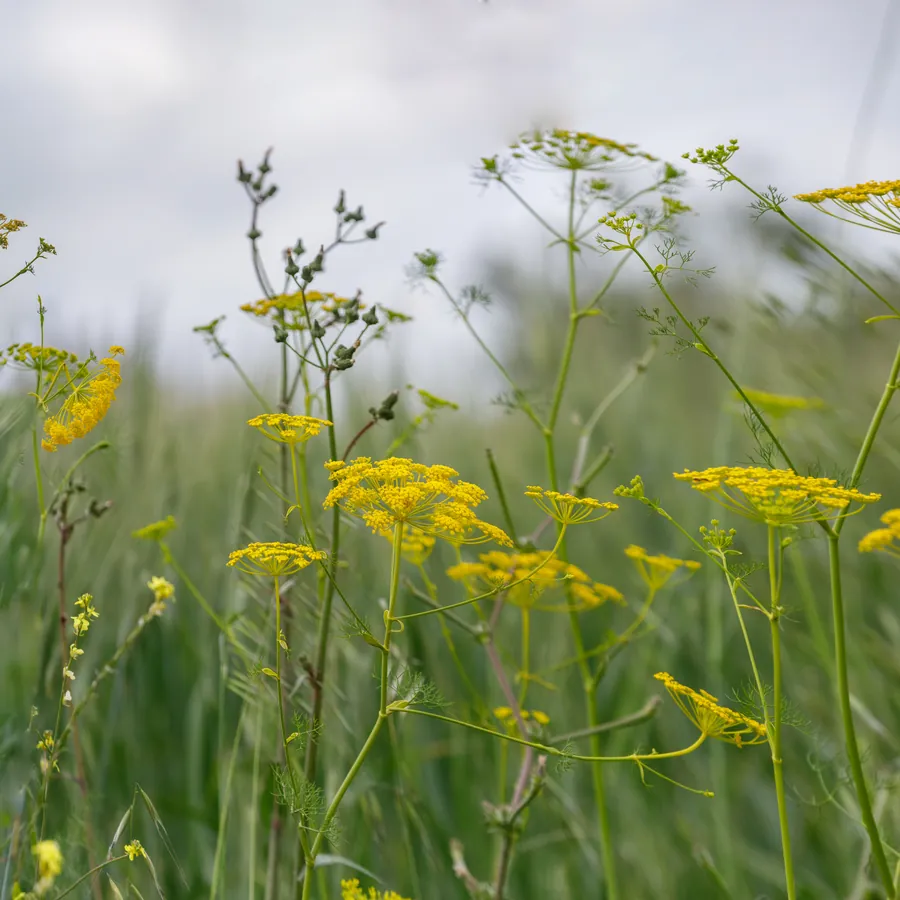
| الشومر | Foeniculum vulgare | Yes | Stem, leaf | July – December |
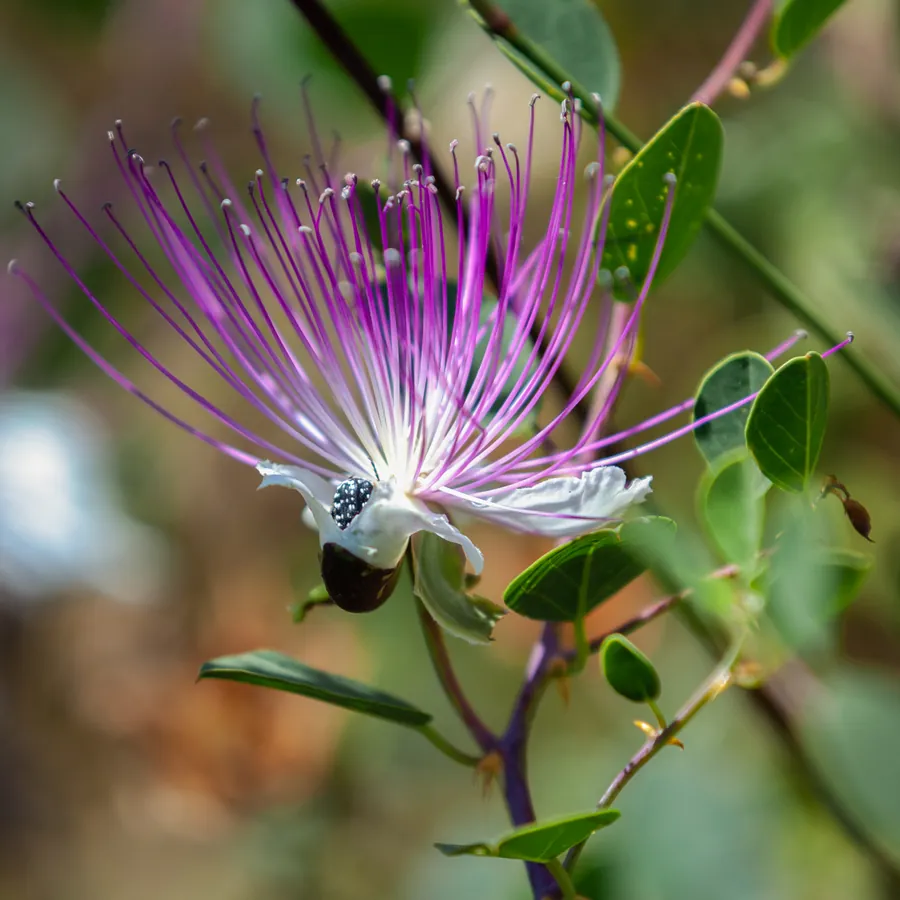
| الكبّار | Capparis spinosa | Yes | Flower bud, young leaf | May – June |
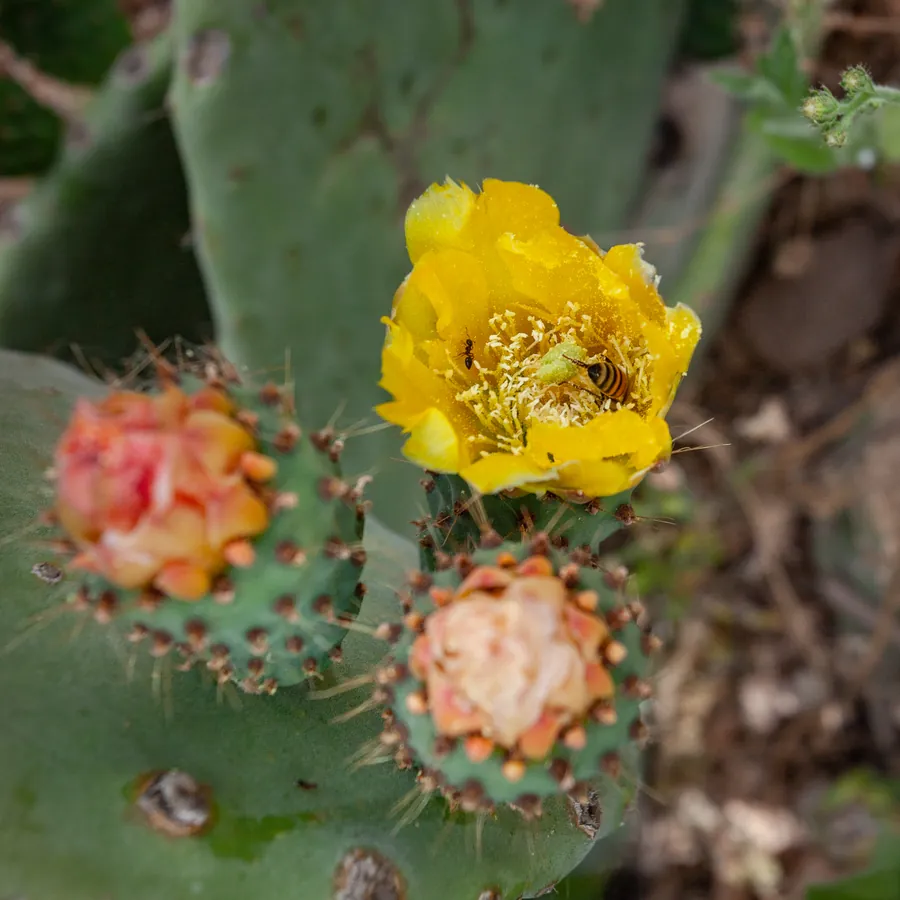
| الصبّار | Opuntia ficus-indica | Yes | Fruit | High summer |
| الزيتون | Olea europaea | Yes — cultivated | Fruit, oil | October – November |
| بخّور مريم | Cyclamen persicum | Yes — leaf only | Leaf | Late January – April |
| الحنون | Anemone coronaria | No — toxic | — | — |
| الجزر البرّي | Daucus carota | Not recorded here | Root — the wild ancestor of the carrot | Absent from the 2018 survey |
| السحلب | Anacamptis pyramidalis | Tubers, regionally | Tuber — as salep | Not recorded in Palestine |
Two rows in that table are doing more work than the rest. The cyclamen is on the list of gathered plants, its leaf is eaten, in the same months it is in flower, and it is also on the protected-plants list, which is the pivot of Record 02. And the hannun is the only plant here that is not eaten at all, which is precisely why the case made for protecting it is worth examining.
03The three that are prosecuted
Three of the plants gathered alongside everything above are the subject of criminal enforcement:
- زعتر — za'atar, Origanum syriacum. Gathered wild, dried, and mixed with sumac and sesame. In the 2018 survey it heads a whole section: five distinct za'atar-type plants, each with its own name.
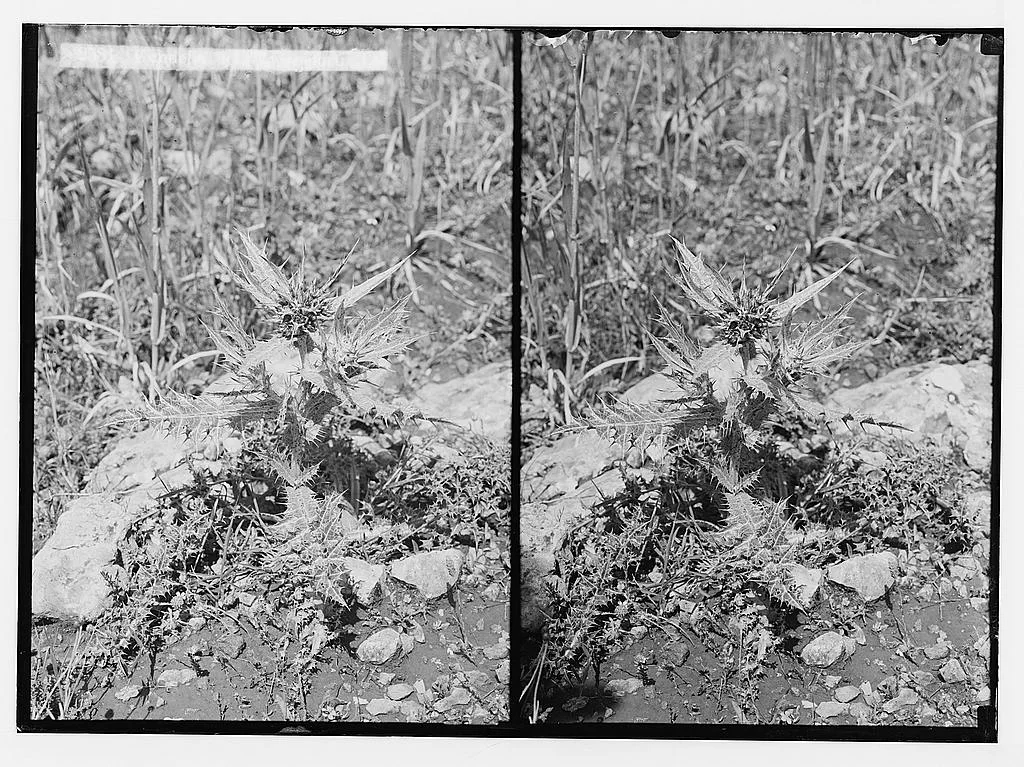
- عكّوب — akkoub, Gundelia tournefortii. A spiny thistle whose flower head is eaten; foraging period March to May. Cleaning it is a long, communal, thorny job that people do together.
- مريمية — maryamiyya, sage, Salvia fruticosa. The tea. In practically every Palestinian kitchen — and, on the count that exists, the second most cited wild edible plant in the country.
These are the everyday, load-bearing wild plants of Palestinian cooking, and gathering them is the offence for which Palestinians have actually been charged, fined and indicted, while no prosecution has been recorded for any of the protected ornamental species.
Of a hundred gathered species, the three that get you a court date are the three in the kitchen.
Set out in full, with the enforcement figures and the legal instrument that produces them, in Under the Law.
04Where this is documented
The wild-food knowledge of Palestine is being written down, by Palestinians, in a deliberate and quite recent effort. The main bodies of work this record draws on:
- Palestinian Wild Food Plants (2018) — edited by the Birzeit University geographer Omar Imseeh Tesdell and published by the Khalil Sakakini Cultural Centre with AFAC. A bilingual Arabic–English field record: for each species, its local names, the parts eaten and the foraging months. Freely readable on the Internet Archive, and licensed CC BY-NC-ND. This record cites its facts and does not reproduce it.
- Barari (براري) — an open-science platform built by the Makaneyyat research team in Palestine with support from the Palestinian American Research Center, publishing community-held knowledge species by species, with the naming and the sourcing kept visible.
- The Biodiversity and Environmental Research Center (BERC), Til, Nablus — the institutional base for the ethnobotanical and ethnopharmacological surveys of Ali-Shtayeh, Jamous and colleagues, which is where the numbers on this page come from.
The through-line is worth stating. Each of these is an act of recording carried out on the understanding that the knowledge is at risk — from the ordinary drift of generations, and also from displacement, closure and the loss of access to the specific hillsides where the knowledge actually lives.
Sources
- Traditional knowledge of wild edible plants used in Palestine (Northern West Bank): a comparative study — M.S. Ali-Shtayeh, R.M. Jamous, J.H. Al-Shafie et al., Journal of Ethnobiology and Ethnomedicine 4:13, 12 May 2008
- Palestinian Wild Food Plants — النباتات البرية الصالحة للأكل — ed. Omar Imseeh Tesdell · Khalil Sakakini Cultural Centre and AFAC, 2018. Licensed CC BY-NC-ND; cited, not reproduced.
- براري / Barari — an open-science platform on wild food plants in Palestine — Makaneyyat research team, with support from the Palestinian American Research Center
- Biodiversity and Environmental Research Center (BERC) — Til, Nablus, Palestine
- أرض الزعتر والعكوب الحزين: لماذا تجرّم إسرائيل قطف النباتات البرية؟ — القدس العربي، على بحث ربيع إغبارية
- Every plant on this page in both languages, with the botanical name beside each: Palestinian plant names. How many wild plants there are in total: 1,710, counted.