Palestinian plant names in Arabic and English
Khubeza is mallow. Akkoub is gundelia. Za'atar is Syrian oregano, not thyme. This is every plant name on the site, in both directions: the Arabic, how it is said, the English, and the botanical name. Press ▶ to hear a name spoken.
Published · Updated · 5 registers · 11 sources cited
01The index
Start from whichever side you know. The Arabic is on the left, the English and botanical names on the right, and the last column links to the plant's full page, where every name is sourced.
| Arabic | Said as | In English | Botanical name | In the record |
|---|---|---|---|---|
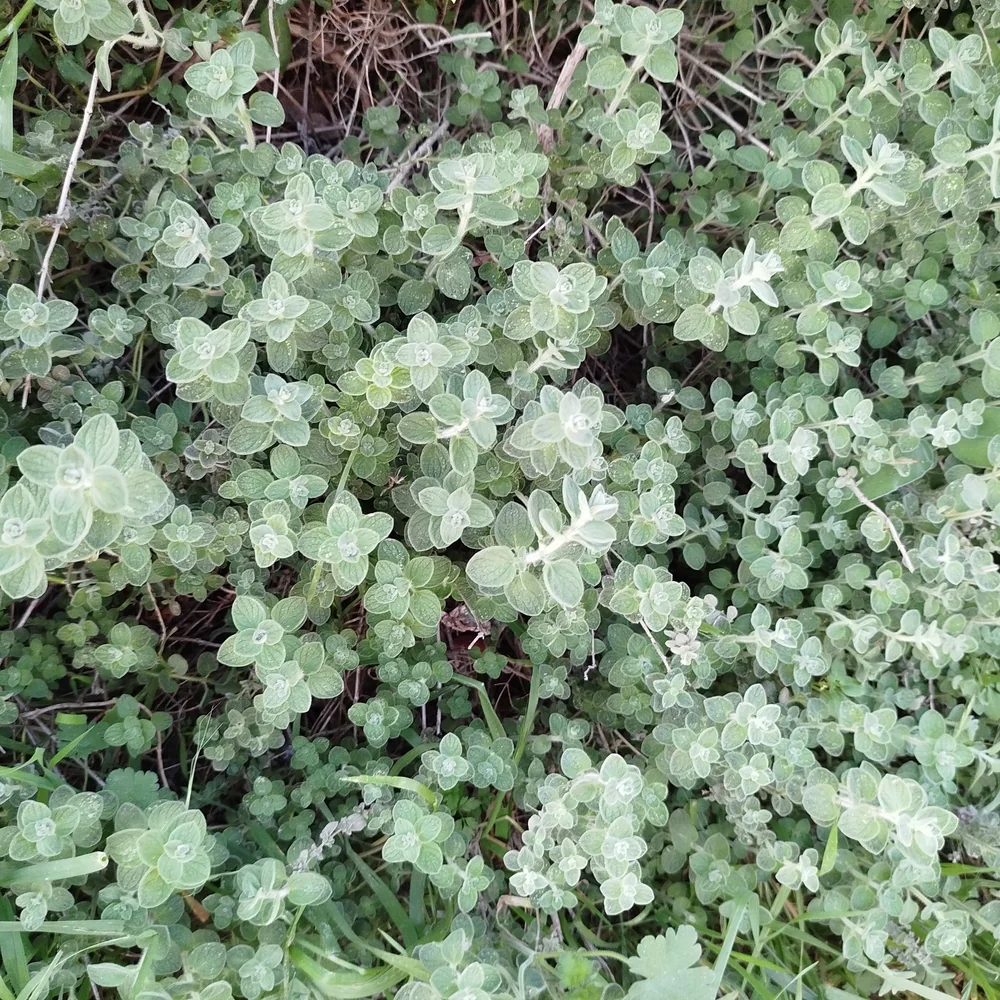
| زعتر ▶ | za'atar | Syrian oregano (not thyme) ▶ | Origanum syriacum | What is za'atar |
| عكّوب ▶ | akkoub | Gundelia, tumble thistle ▶ | Gundelia tournefortii | What is akkoub |
| خبيزة ▶ | khubeza | Common mallow ▶ | Malva sylvestris | What is khubeza |
| مريمية ▶ | maramia | Greek sage ▶ | Salvia fruticosa | What is maramia |
| الحنون ▶ | hannun | Crown anemone, red anemone ▶ | Anemone coronaria | Record 01 |
| دحنون ▶ | dahnun | The same flower | Anemone coronaria | Record 01 |
| شقائق النعمان ▶ | shaqa'iq al-nu'man | The same flower, formal Arabic | Anemone coronaria | Record 01 |
| زهرة الدم ▶ | zahrat al-dam | “The blood flower” | Anemone coronaria | Record 01 |
| زهرة النساء ▶ | zahrat al-nisa | “The women's flower” | Anemone coronaria | Record 01 |
| الخشخاش ▶ | khashkhash | Corn poppy — a different plant ▶ | Papaver rhoeas | Not a poppy |
| بخور مريم ▶ | bakhur Maryam | Persian cyclamen ▶ | Cyclamen persicum | Record 02 |
| زعمطوط ▶ | za'amtut | The same plant | Cyclamen persicum | Record 02 |
| قرن الغزال ▶ | qarn al-ghazal | “The gazelle's horn” | Cyclamen persicum | Record 02 |
| دان القط ▶ | dan al-qitt | “The cat's ear” | Cyclamen persicum | Record 02 |
| العرطنيثا ▶ | al-artanitha | The same plant, older | Cyclamen persicum | Record 02 |
| الزيتون ▶ | zaytun | Olive — the crop and the grove ▶ | Olea europaea | Record 03 |
| زيتونة ▶ | zaytuna | One olive tree | Olea europaea | The national tree |
| الصبّار ▶ | sabbar, sabr | Prickly pear ▶ | Opuntia ficus-indica | Record 04 |
| التين الشوكي ▶ | at-tin ash-shawki | “The thorny fig” | Opuntia ficus-indica | Record 04 |
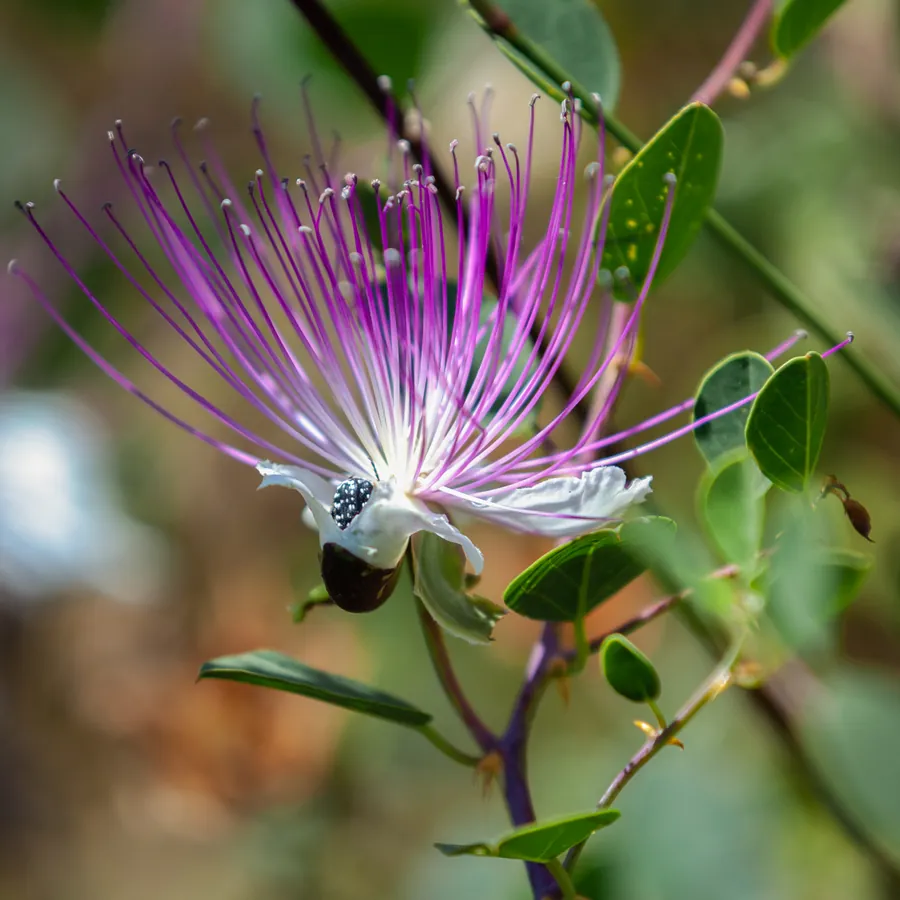
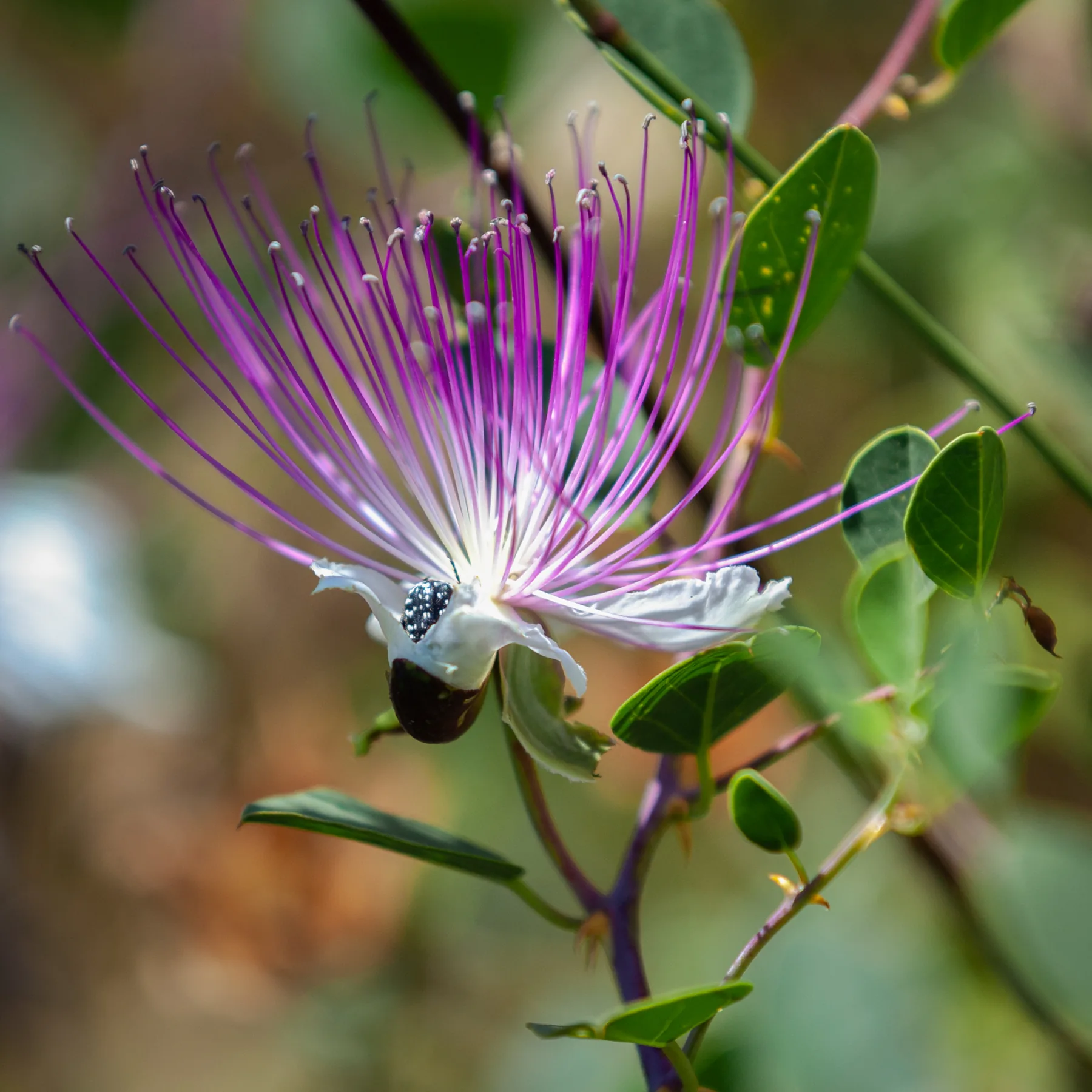
| الكبّار ▶ | kabbar | Caper ▶ | Capparis spinosa | Record 05 |
| القبّار ▶ | qabbar | Caper | Capparis spinosa | Record 05 |
| الشفلح ▶ | shafallah | Caper | Capparis spinosa | Record 05 |
| الأصف ▶ | asaf | Caper | Capparis spinosa | Record 05 |
| العلّوق ▶ | alluq | Caper | Capparis spinosa | Record 05 |
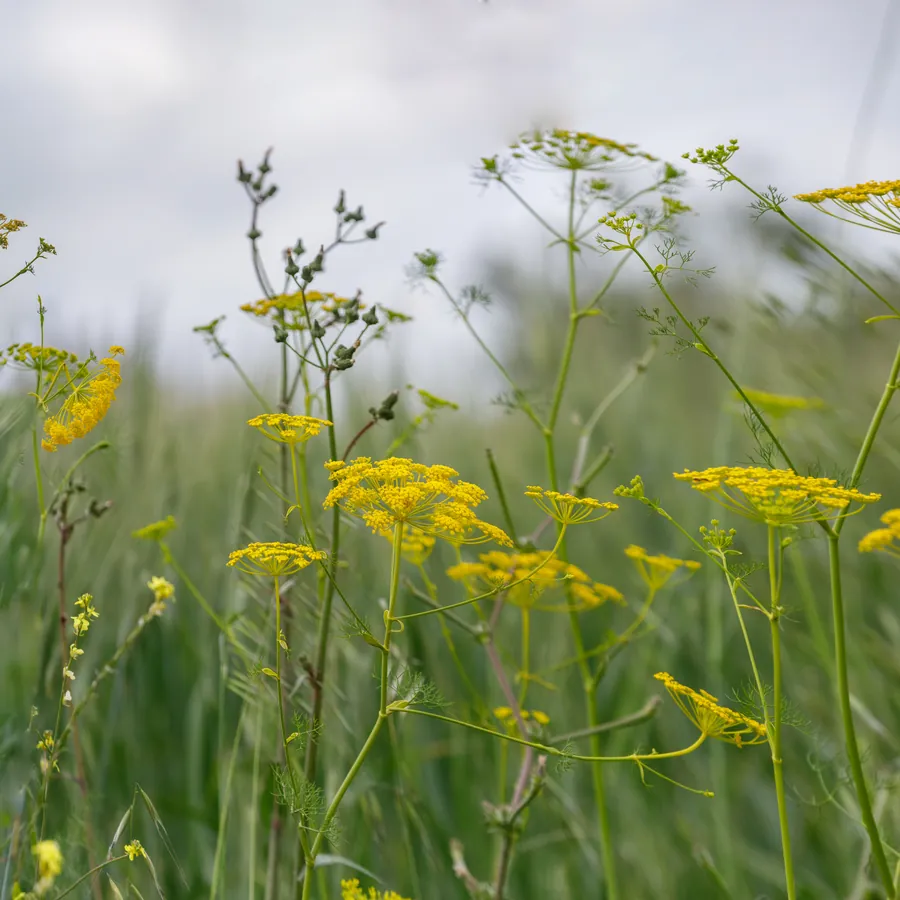
| الشومر ▶ | shomar | Wild fennel ▶ | Foeniculum vulgare | Record 06 |
| السحلب ▶ | sahlab | Orchid — and the winter drink ▶ | Anacamptis pyramidalis | Record 07 |
| خصى الثعلب ▶ | khusa al-tha'lab | “The fox's testicles” | Orchidaceae, generally | Record 07 |
| خصى الكلب ▶ | khusa al-kalb | “The dog's testicles” | Orchidaceae, generally | Record 07 |
| الجزر البرّي ▶ | jazar barri | Wild carrot, Queen Anne's lace ▶ | Daucus carota | Record 08 |
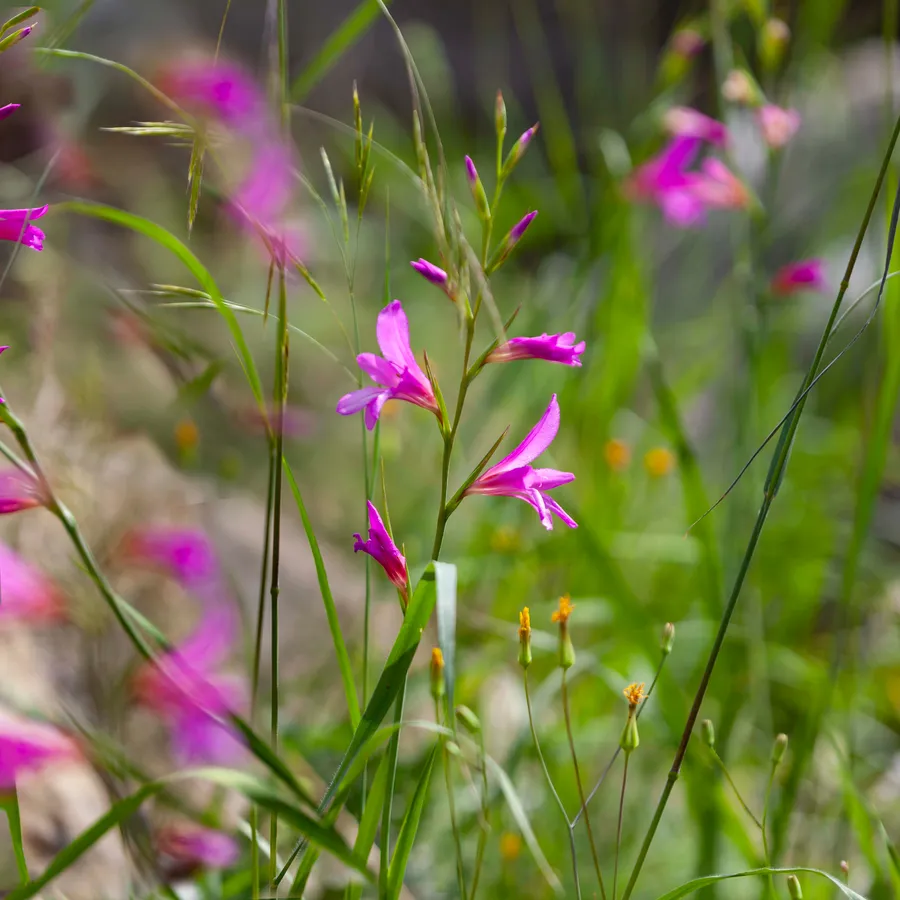
| سيف الغراب ▶ | saif al-ghurab | “The crow's sword”; in English, Italian gladiolus ▶ | Gladiolus italicus | Record 09 |
| منقار العصفور ▶ | minqar al-usfur | “The bird's beak” | Gladiolus italicus | Record 09 |
| سوسن الحقل ▶ | susan al-haql | “The field iris” | Gladiolus italicus | Record 09 |
| دلبوث ▶ | dilbuth | The same plant | Gladiolus italicus | Record 09 |
| سوسن فقوعة ▶ | susan Faqqu'a | Faqqua iris (English: Gilboa iris) ▶ | Iris haynei | Record 10 |
▶ plays the name. The Arabic is read in a Palestinian voice from Ramallah, the English in an American one. Both are synthetic voices, made with ElevenLabs. If a name sounds wrong, please say so: how corrections work.
Two names need a warning. الحنون is often translated as “poppy.” It is an anemone, from the buttercup family, not a poppy (the poppy question). The corn poppy, الخشخاش, is listed in the table only so the two are not confused. And زعتر is often translated as “wild thyme,” but the za'atar in this index is Syrian oregano, Origanum syriacum, not a species of thyme (what is za'atar).
02Which plants have the most names
Five of the fifteen plants have three or more Arabic names. None has more than two English ones.
| Plant | Arabic names recorded | English names in ordinary use |
|---|---|---|
| Capparis spinosa | 5 | 1 |
| Anemone coronaria | 5 | 2 |
| Cyclamen persicum | 5 | 1 |
| Gladiolus italicus | 4 | 1 |
| Orchids, as a group | 3 | 1 |
| Opuntia ficus-indica | 2 | 1 |
The caper, the anemone and the cyclamen each have five Arabic names recorded here; the prickly pear has two. How many names a plant has here partly reflects how much has been written down about it, so these counts are a minimum, not a measure of how much each plant matters.
The caper and gladiolus counts come from Barari, the Palestinian open-science platform for wild plants (براري — Capparis spinosa). The anemone's names come from the Palestinian ethnographer Hamza al-Aqrabawi, writing in Ultra Palestine.
03Many of the names describe the plant
Several of these names simply describe what the plant looks like.
- سيف الغراب — the crow's sword. For gladiolus leaves, which are flat, stiff and stand straight up out of the ground.
- منقار العصفور — the bird's beak. For the same plant's bud: narrow, pointed, hooked slightly open at the tip.
- قرن الغزال — the gazelle's horn. For the way cyclamen petals sweep backwards.
- خصى الثعلب — the fox's testicles. For the paired underground tubers of an orchid. The European name makes the same comparison: orchis is Greek for testicle.
- التين الشوكي — the thorny fig. For the prickly pear, which is neither a fig nor native to Palestine.
04What the English names refer to
For eight of the fifteen plants, the English or botanical name refers to something other than the plant itself: a person, a country, a Bible verse, or a Hebrew place name.
| Plant | The name | What it refers to |
|---|---|---|
| Daucus carota | Queen Anne's lace | An English queen (the story of which queen varies), and a kind of lace |
| Iris haynei | Gilboa iris | Gilboa is the Hebrew name of a ridge called الجلبوع, Jalbūʿ, in Arabic. The botanical name honours Friedrich Gottlob Hayne, a Berlin pharmacologist |
| Anemone coronaria | “Lily of the field” | A verse in Matthew's Gospel, used as the caption on the 1900 photographs |
| Cyclamen persicum | Persian cyclamen | Persia, where it does not grow wild |
| Salvia fruticosa | Greek sage | Greece; it grows across the eastern Mediterranean |
| Origanum syriacum | Syrian oregano | Syria; the older English gloss “wild thyme” names the wrong genus |
| Gladiolus italicus | Italian gladiolus | Italy |
| Gundelia tournefortii | Gundelia | Two European botanists, Andreas Gundelsheimer and Joseph Pitton de Tournefort |
The Arabic names mostly describe the plant. The English names mostly point somewhere else: a queen, a ridge under its Hebrew name, a Bible verse, or a country. Both kinds are real names in everyday use.
One place this can be seen at scale is the American Colony's photographic survey from around 1900: 119 plates of Palestinian plants, and not one caption carries a word of Arabic.
05How the count was made
On 3 September 2026 we counted every Arabic plant name published on this site, across all fifteen plants, and every English name in ordinary use for the same plants.
- 33 Arabic names (the corn poppy row is a warning, not a name for any of the fifteen)
- English names: one for eleven plants, two for akkoub, the anemone, the wild carrot and the Faqqua iris
- 5 plants carrying three or more Arabic names
- 8 plants whose English or botanical name refers to a person, place or text outside Palestine
Sources
- براري Barari — Capparis spinosa — the Palestinian open-science platform for wild plants; source of the caper's five Arabic names and, at species 693, the gladiolus's four. CC BY. Palestinian.
- T. Canaan, “Plant-lore in Palestinian Superstition,” JPOS 8 (1928): 129–168 — the source for hubbezeh and the plant-name material behind several entries. Read at source. Palestinian-authored — see the Jerusalem Circle.
- M. S. Ali-Shtayeh, R. M. Jamous, J. H. Al-Shafie‘ et al., “Traditional knowledge of wild edible plants used in Palestine (Northern West Bank),” J. Ethnobiol. Ethnomed. 4:13 (2008) — 190 informants, 100 species; the ranking behind which of these plants are most used. An-Najah University and BERC. Palestinian-authored.
- Hamza al-Aqrabawi, writing in ألترا فلسطين — the anemone's local names, and the sowing proverb attached to them. Cited in full on Record 01. Palestinian.
- Plants of the World Online — Royal Botanic Gardens, Kew; every binomial in the index above was checked against POWO for accepted status before publication
- GBIF — the second check on each binomial, and the source of family placements
- Wikidata — entity identifiers for all fifteen plants, listed in this page's structured data so software can match them to the right plants
- The naming asymmetry, counted across a 1900 photographic survey: Wild Flowers of Palestine — 119 plates, 0 words of Arabic, 7 captions built on scripture.
- Why زعتر is not thyme: What is za'atar. Why الحنون is not a poppy: the poppy question.
- Which of these plants are gathered and eaten: Edible. Which of them Palestinians are prosecuted for gathering: Under the Law.
- Every Arabic name here is sourced on the plant page linked in the last column. This page adds none that is not.