How this record is made.
What it is, where the photographs come from, how the writing is sourced, and, at the bottom, a standing list of what has not yet been verified.
Updated · 6 registers
01What this is
A record of the wild plants of Palestine, built one plant at a time. Each entry pairs original photography taken on the ground in Palestine with writing about what the plant is called, where and when it grows, whether it is eaten, what it carries culturally, and how the law treats it.
Every page is built as a series of registers — self-contained sections, each anchored by a different photograph and each citing its sources inline. Not every plant fills every register. Which ones it fills is itself part of the record: that the hannun has no entry under "at the table" and a long one under "policing what grows" is a finding, not a gap.
02The photographs
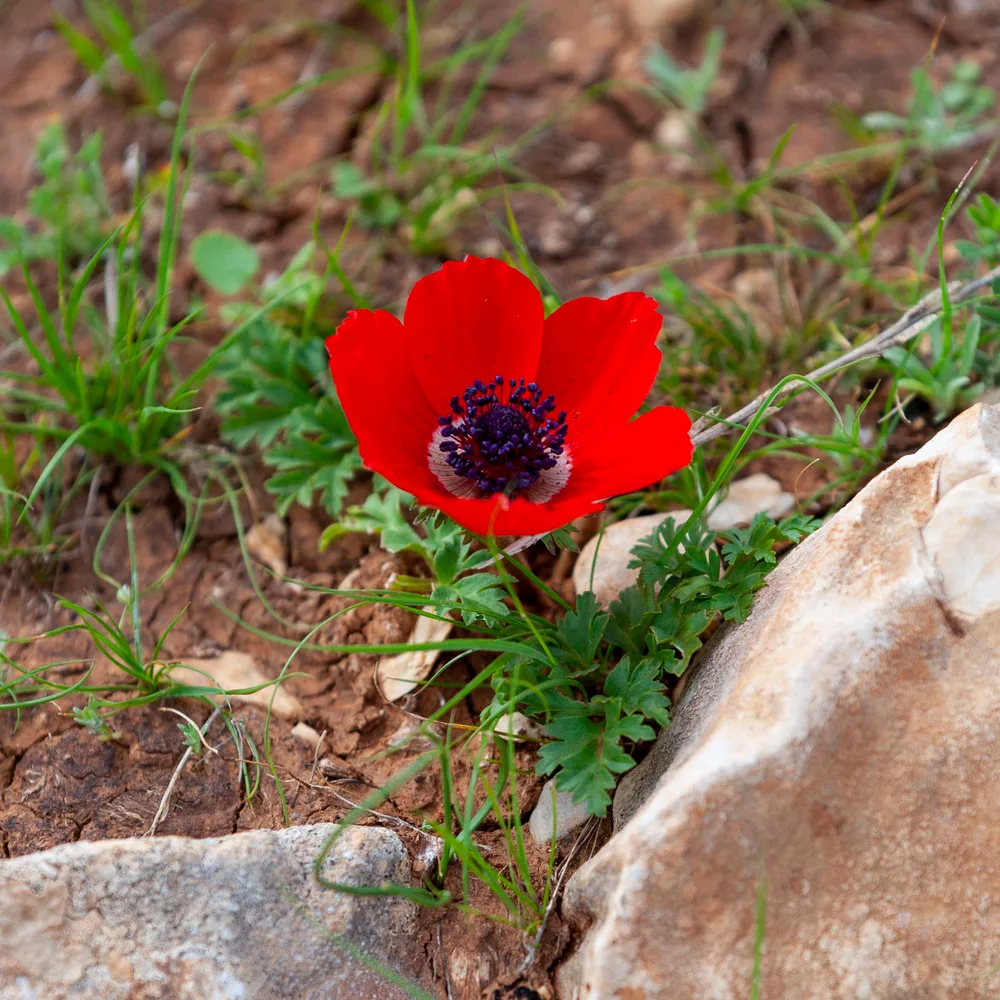
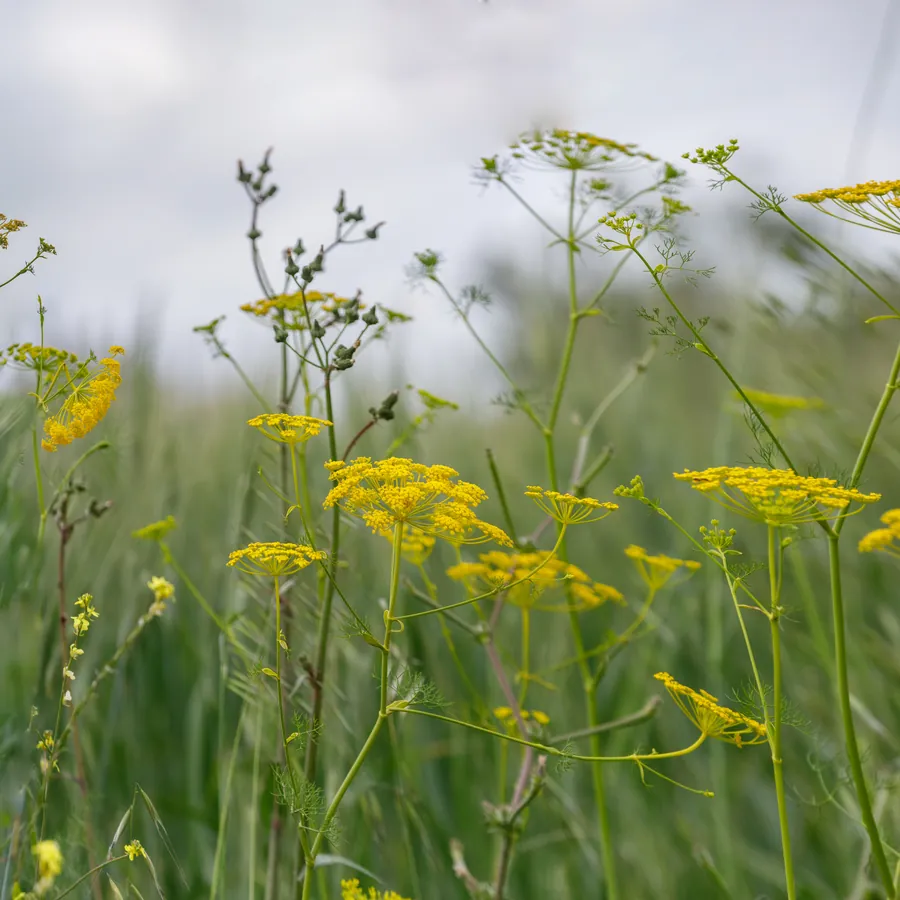
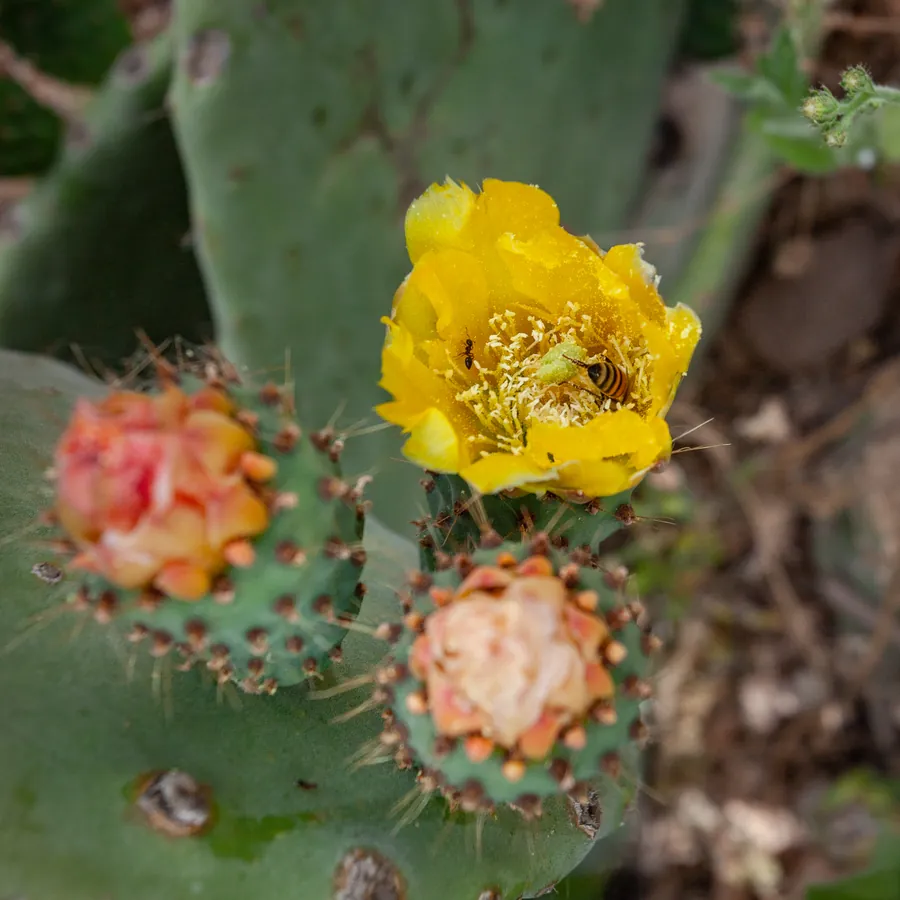
Every photograph of a living plant on this site was taken in Palestine, by a Palestinian artist — in the field where the plant grows, and in some cases again in the studio as a specimen against a plain ground. Nothing is stock, and nothing is generated.
The photographer is not yet named here. That is a deliberate, temporary choice made while the record is still early, and it will be corrected — the work will be credited in full, and this page will say so when it is. Until then the photographs are hers, all rights reserved, and captions carry only place and season.
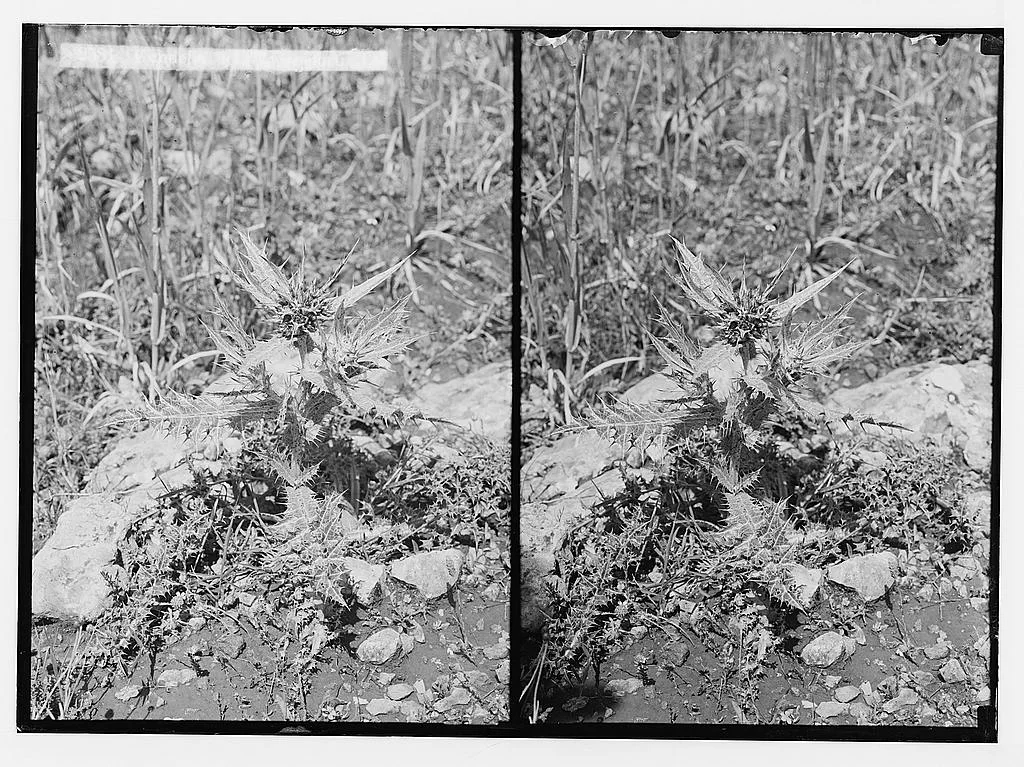
Historical black-and-white plates are a separate category and always labelled as such. They come from the Matson (American Colony) Collection at the Library of Congress — photographs made in Palestine between roughly 1898 and 1946, with no known restrictions on publication. Each is captioned with its original title, its date and its catalogue number, and where a plate is one half of a stereograph pair, the caption says so.
03How the writing is sourced
Five rules, applied to every page:
- Palestinian and Arabic sources first. Palestinian research institutions, Palestinian human-rights organisations, Palestinian and Arabic publications. Searches are run in Arabic as well as English — several of the most load-bearing facts on this site exist in Arabic sources and nowhere in English.
- Read the source, never a search-engine summary. This is not a stylistic preference. An early draft of this site nearly published a claim about the wording of a piece of legislation that came from a search summary and turned out to be wrong; the actual article said something more precise and, as it happened, stronger.
- Every strong claim carries a citation — a named organisation, a named researcher, a court record, a dated report, a legal instrument. Assertion without evidence is weak and easy to dismiss. A sourced indictment is not.
- Datasets are kept separate. Where two bodies of documentation cover different windows or different instruments, they are cited separately rather than added together into a larger-sounding number.
- Where something is unverified, the page says so — in the page, not in a footnote somewhere else. See the open questions below.
Being uncompromising and being rigorous are not in tension. The citation is what makes the uncompromising version impossible to wave away.
04Standpoint
This record is written from an explicitly Palestinian standpoint, and says so plainly rather than performing a neutrality it does not have.
Concretely, that means: Israeli military orders applied over occupied Palestinian land are described as what they legally are — instruments of an occupying power, whose authority to legislate is narrow, exceptional and temporary under the Hague Regulations and the Fourth Geneva Convention, and not as ordinary domestic law. Actors are named rather than hidden in the passive voice. Palestinian sources are reported in the register they actually use rather than softened into neutrality. Israeli state and state-adjacent databases are not used as sources anywhere on this site.
None of that licenses imprecision, and the reverse is closer to the truth: the standpoint is exactly why the sourcing has to be airtight.
05What is not yet verified
A standing, public list. Items move off it when they are resolved.
- Whether prosecutions for gathering za'atar, akkoub and sage fell after 2019. Adalah's intervention that year produced a stated intention to revise enforcement policy. The documented figures end in 2018. This record does not know what happened next and does not imply the matter was resolved (Under the Law).
- Whether Anacamptis pyramidalis is dug for salep in Palestine specifically. The overharvesting evidence is regional. No Palestinian-specific evidence has been found, and none is asserted (Record 07).
- A motif-by-motif mapping from tatreez patterns to the species in this record. Cypress and palm are documented; the wildflowers are not, and the correspondence will not be invented (Culture).
- Location and month for each photograph. Captions currently say "Palestine" and a season. They should say the hillside and the week, and in time they will.
- A 2025 archaeobotanical paper on the caper's disappearance as a cultivated crop in the southern Levant could not be read past its title. Nothing from it is used (Record 05).
06Corrections
If something here is wrong, this record wants to know, and will fix it and say that it did.
That applies especially to three things: species identifications, which are made carefully but by eye; Arabic names and local usage, which vary by region and which a written source can flatten; and anything legal or numerical, where precision is the entire point.
Corrections are credited unless the person sending them would rather not be.